 Quarry tiles have been the go-to outdoor flooring for South African homes for decades, long before “indoor-outdoor living” became a design term. There’s a reason they’ve stuck around while trendier materials have come and gone: they’re genuinely tough, genuinely low maintenance, and they only get better looking with age. This guide covers everything you need to plan a terracotta quarry tile project properly, from sizing and coverage through to pattern selection and installation.
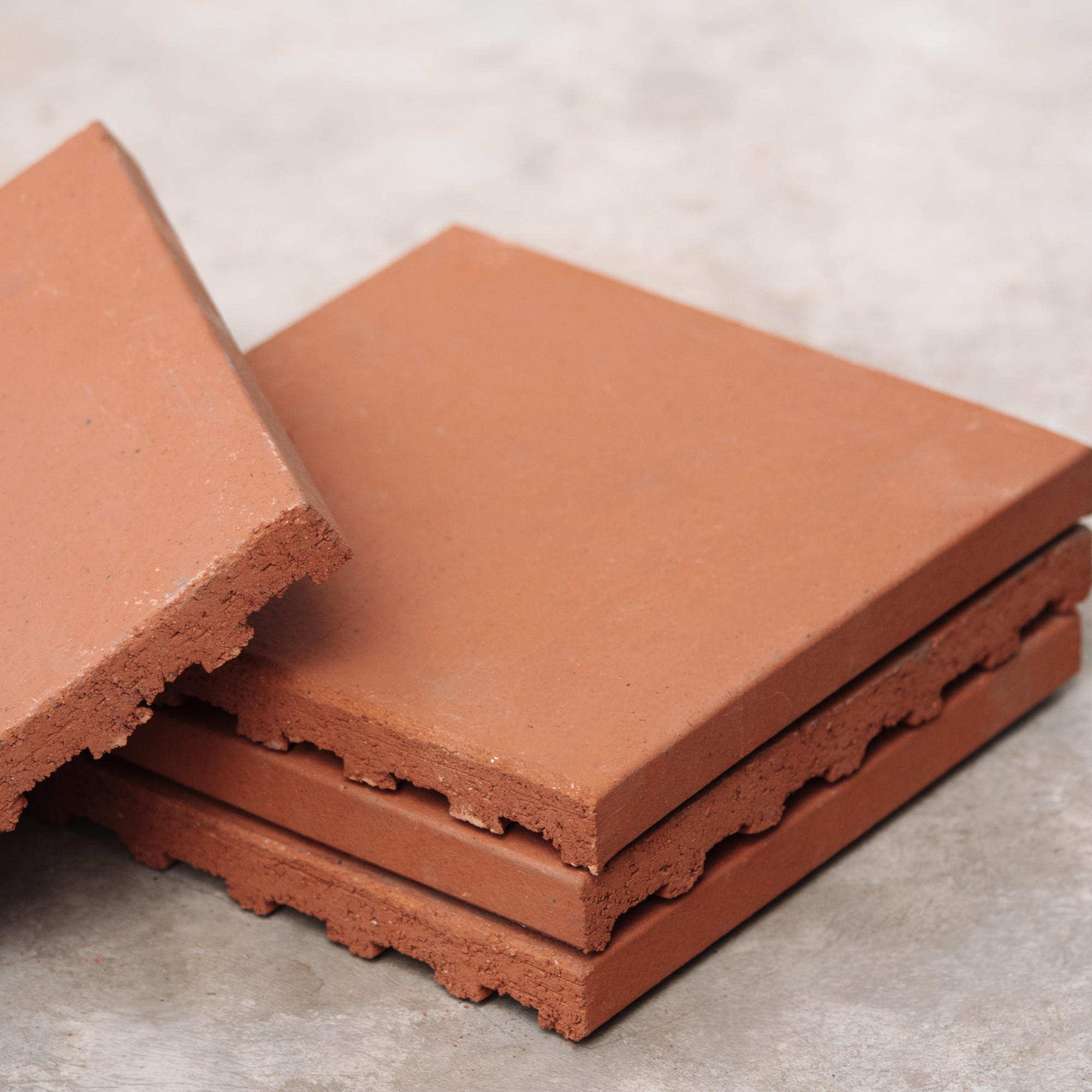
Our Terracotta Quarry Tile is a square 175 × 175 × 18 mm clay tile, made for both interior and exterior flooring. Unlike thinner tile products, the 18 mm thickness gives quarry tiles the strength to handle high foot traffic, which is exactly what a patio, courtyard, or commercial floor needs day after day.
Authentic terracotta clay construction, a square 175 × 175 × 18 mm format, 33 tiles per m², and a rating for both indoor and outdoor use.
Quarry tiles offer a rare combination of rustic warmth and genuine outdoor performance. Fired clay products are recognised for their weathering resistance and strength once fired at the right temperature range, which is part of why the Clay Brick Association of Southern Africa points to clay as one of the more durable materials available for South African exteriors. Their thick clay body resists cracking under normal outdoor use far better than thinner ceramic alternatives, which is why so many older Cape farmhouses still have their original quarry floors.
The pattern you choose has a bigger impact on how a courtyard or patio feels than most people expect.
A clean, minimalist look that suits contemporary homes and doesn’t fight for attention with other design elements.
Rotating the tile 45 degrees makes a smaller courtyard feel noticeably larger — a useful trick for townhouse patios and tight side gardens.
The premium, high-end finish. More cutting, more wastage, but a genuinely striking result on a statement entertainment area.
A traditional, textured surface that suits heritage-style homes and reads as intentional rather than budget.
For outdoor entertainment areas specifically, diagonal and basket weave patterns tend to perform particularly well, since they help disguise minor variations in natural clay tone.
Quarry tiles are sold in packs of 10, with 33 tiles needed per square metre using a standard 10 mm grout joint. As with all terracotta products, always add 5–10% extra to your order for cuts, corners, and general wastage — particularly important for diagonal or herringbone layouts, where offcuts increase fast.
A quarry tile floor is only as neat as its edges. Our Terracotta Quarry Tile Bullnose is purpose-built for steps, patio borders, and wall capping, with a smooth rounded edge that protects against chipping while giving your installation a polished, professional finish rather than a raw cut edge.
Before laying any quarry tile, the subfloor must be level, clean, and free of debris. Use a high-quality cement-based adhesive suitable for terracotta, with a 10 mm grout joint recommended for both indoor and outdoor applications. Because terracotta is porous, sealing before grouting produces a cleaner, more consistent finish. Our full sealing process is covered in How to Seal and Waterproof Terracotta Tiles in South Africa.
Quarry tiles pair naturally with narrower Klompie tiles for feature walls or borders, and with thin brick tiles for adjoining vertical surfaces such as low garden walls or planters. This layered approach is a popular way to create a cohesive terracotta theme across an entire outdoor living area, and connects well with the broader trend covered in Creating Seamless Indoor-Outdoor Flow with Terracotta Flooring. You’ll find both formats in our brick tile range and thin brick range.
Even experienced tilers can run into trouble with terracotta quarry tiles if the material isn’t treated correctly.
This allows grout haze to soak into the porous clay and become extremely difficult to remove afterward — one of the most common and most avoidable mistakes on site.
Diagonal or herringbone layouts can push actual usage well beyond the standard 10% allowance once offcuts are accounted for.
A rigid, non-flexible adhesive on outdoor installations can crack as the substrate expands and contracts with temperature changes, so always choose one rated for exterior and natural clay applications.
While quarry tiles are a relatively straightforward format to work with, outdoor installations involving level changes, drainage falls, or complex patterns are best left to an experienced tiler. A professional will also advise on the correct adhesive bed thickness for your specific subfloor, which varies depending on whether you’re tiling over concrete, screed, or an existing patio surface.
Quarry tiles are low maintenance once sealed, but periodic cleaning and resealing help preserve their appearance. For a complete maintenance routine, see How to Clean and Maintain Terracotta Floor and Wall Tiles.
Once you’ve settled on a pattern and worked out roughly how many square metres you’re covering, the next step is getting accurate pricing for your specific project. Contact Brick Tile Shop for a quote covering tiles, bullnose trims, adhesive, and sealer, so you can budget the whole job in one go rather than piecing it together as you go.
You will need approximately 33 tiles per square metre with a 10 mm grout joint. Tiles are sold in packs of 10.
Yes. Quarry tiles are rated for both interior and exterior applications, including patios, courtyards, kitchens, and hallways.
Yes. Terracotta is porous, so sealing before grouting is recommended for a cleaner finish and easier long-term maintenance.
Quarry tiles are a larger, square 175 × 175 mm floor tile designed for flooring, while klompie tiles are a narrow 225 × 50 mm brick-format tile suited to feature walls, borders, and detailed patterns.