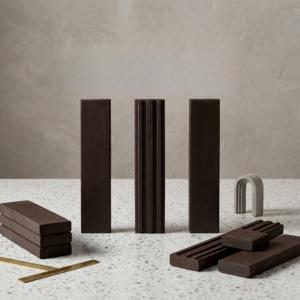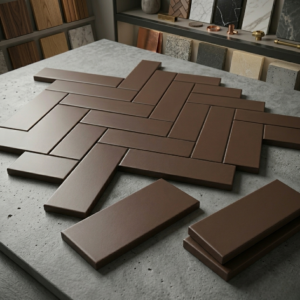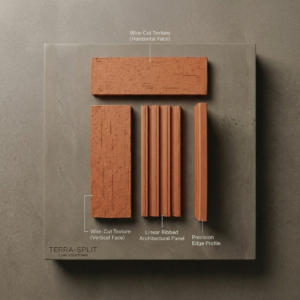
 Once you’ve decided on thin brick tiles for an interior wall, the harder question shows up: Satin or Travertine? Both finishes offer the authentic look of real clay brick, but they create genuinely different atmospheres depending on the room and the light it gets. Here’s how to choose properly rather than flipping a coin at the showroom.
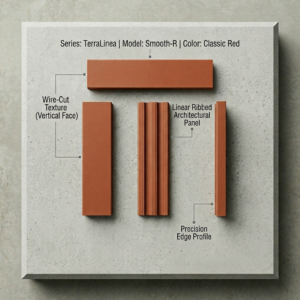
The Terracotta Satin Thin Brick offers a smooth surface with a consistent warm terracotta tone. This finish suits homeowners who want the character of brick without a heavily textured or rustic feel. It works particularly well in spaces that need to feel clean, current, and easy to maintain.
Smooth, even surface with a consistent warm terracotta tone. Suits modern kitchens, living areas, and retail interiors, and is simple to wipe down and maintain day to day.
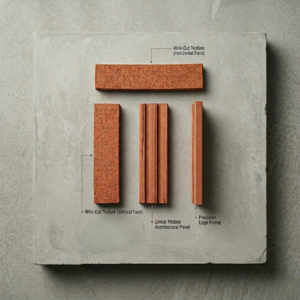
The Terracotta Travertine Thin Brick introduces the soft, varied surface texture associated with natural travertine stone. This finish adds visual depth and a more organic, lived-in character, making it a strong choice for farmhouse interiors, fireplace surrounds, and spaces built around natural materials.
Textured, stone-inspired surface with natural colour variation tile to tile. Suits rustic, heritage, and farmhouse interiors, and complements timber, stone, and exposed concrete without looking mismatched.
| Feature | Satin | Travertine |
| Texture | Smooth | Natural & varied |
| Best suited to | Modern, minimalist interiors | Rustic & heritage interiors |
| Tile size | 225 × 70 × 14 mm | 225 × 75 × 14 mm |
| Coverage per box | 52 tiles / 1 m² | 52 tiles / 1 m² |
| Visual mood | Clean & contemporary | Warm & organic |
For kitchen splashbacks, the Satin finish is often preferred, as its smoother surface is easier to keep clean around cooking areas where grease and splashes are a daily reality.
Travertine works beautifully as a fireplace surround or living room feature wall, where its natural texture creates a warm, inviting focal point that draws the eye without shouting for attention.
Both finishes suit commercial fitouts, but the choice often comes down to brand tone — Satin for a sleek, modern retail feel, Travertine for a boutique, artisanal atmosphere.
For a more detailed, decorative pattern in the same finish family, our narrower Klompie tiles are also available in both Satin and Travertine, making it easy to combine formats within a single project — for example, thin brick across a main wall with klompie tiles as a decorative border.
Both finishes install identically, using tile adhesive and a 10 mm mortar joint, with each box covering 1 m². Neither texture requires a different installation method — the decision is purely aesthetic. For a full step-by-step approach to fitting thin brick tiles, see How to Build a Lightweight Brick Feature Wall with Thin Brick Tiles. For quantity planning across our wider range, our Ultimate Guide to Terracotta Quarry Tiles for Patios and Courtyards covers the same coverage principles.
Lighting plays a bigger role in how these two finishes read than most homeowners expect.
Under pendant lights over a kitchen island, the Satin finish tends to glow evenly, emphasising its smooth, contemporary character.
The Travertine finish responds beautifully to light from a window or skylight, where shadows catch the surface variation and bring out its depth throughout the day. Satin, by contrast, remains more visually consistent regardless of the lighting conditions in the room.
If you’re still undecided, consider the overall style of the room rather than the tile in isolation. A minimalist, monochrome kitchen or bathroom will generally suit the Satin finish’s clean uniformity, while a room built around natural textures like exposed timber beams, linen upholstery, or raw plaster will pair more naturally with Travertine. It’s also worth considering how the wall will be used: high-touch areas like kitchen splashbacks benefit from Satin’s easier upkeep, while decorative, low-traffic feature walls give you more freedom to choose based on aesthetics alone.
Both finishes are low maintenance once sealed. The Satin finish is marginally quicker to clean due to its smoother surface, but the Travertine finish is more forgiving of minor surface marks thanks to its natural texture. For full care guidance, see How to Clean and Maintain Terracotta Floor and Wall Tiles.
Photos only tell you so much about how Satin or Travertine will actually look in your kitchen or living room. Contact Brick Tile Shop to request samples of both finishes, or get a quote once you’ve settled on the one that fits your space.
Satin is generally preferred for splashbacks due to its smoother, easier-to-clean surface, though both finishes perform well when properly sealed.
Yes. Both share compatible sizing and coverage, so combining finishes across different walls or zones is straightforward.
Travertine is the better match for heritage and farmhouse interiors, thanks to its natural texture and colour variation.
Coverage and installation requirements are identical for both finishes, so labour costs typically do not differ based on texture choice.