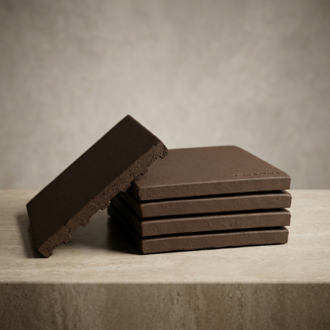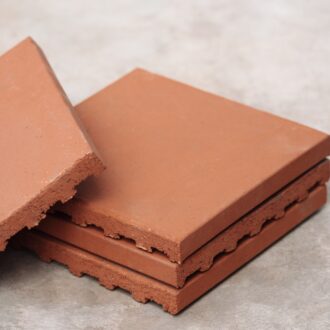
Terracotta quarry tiles bring the rich, warm character of natural fired clay to residential, commercial and architectural spaces. Available in standard 150 x 150 mm and 175 x 175 mm sizes, these clay quarry tiles can be used to create practical floors with an authentic red, orange and earthy appearance.
Additional quarry tile sizes may be manufactured on request, subject to production feasibility, minimum quantities and manufacturing lead times. Browse the available products or contact Brick Tile Shop for assistance with quantities, custom sizes and delivery.
Terracotta quarry tiles are manufactured from clay and fired to produce hard-wearing tiles with the natural beauty and variation associated with genuine clay products. Their warm, earthy character makes them particularly suitable for designs inspired by traditional South African, Mediterranean, rustic, farmhouse and contemporary-industrial architecture.
Unlike printed tiles that imitate clay, genuine terracotta quarry tiles obtain their character from the clay body and firing process. Individual tiles may display subtle differences in colour, texture and tone. This variation is part of the natural appearance of the material and can create a floor with greater depth and visual interest.
The exact technical classification, finish, thickness, water absorption and performance characteristics should be confirmed for the selected product before ordering.
Our commonly requested square quarry tile sizes include:
Custom-made sizes are subject to manufacturing capability, minimum production quantities, production schedules and written quotation.
When requesting a custom quarry tile size, please provide:
Providing these details allows Brick Tile Shop to obtain more accurate information regarding manufacturing feasibility, pricing and lead time.
Depending on the technical specifications of the selected tile, terracotta quarry tiles may be considered for applications such as:
The tile’s suitability must be checked against the conditions of the project. Outdoor exposure, standing water, moisture, heavy traffic, cleaning requirements and required slip resistance can all influence product selection.
Terracotta quarry floor tiles should not automatically be treated as clay paving bricks. A quarry tile and a clay paver can have different dimensions, thicknesses, installation requirements and load-bearing capabilities. Use a product specifically approved for the intended floor, paving or traffic application.
The natural burnt-red, orange and earthy tones of terracotta quarry tiles work well with a wide variety of building materials and colours. They can be combined with:
Square quarry tiles can be installed in a straight grid for an orderly traditional appearance or laid diagonally to introduce movement and make a space feel visually wider.
The chosen grout colour will also affect the completed appearance. A grout colour close to the tile creates a more uniform surface, while a contrasting grout emphasises the shape and layout of each tile. Ask the installer to prepare a small sample before completing the entire installation.
Terracotta is a natural clay product, and some variation between individual quarry tiles may occur. Differences in shade, surface character and dimensions can result from the clay composition and firing process.
For a well-balanced installation:
Product photographs and screen colours should be treated as a guide. Lighting conditions, photography and different screens can alter the way terracotta colours appear.
Quarry tile installation should be completed over a clean, stable and properly prepared surface. The appropriate substrate, adhesive or mortar, grout, movement joints and installation system will depend on the project conditions and the specifications of the selected tile.
A qualified installer should assess:
Some terracotta or clay tiles may benefit from sealing, but sealing requirements vary according to porosity, surface finish and intended application. Always confirm the manufacturer’s recommendations and test the proposed sealer on a sample tile before treating the completed floor.
The following calculations use the face dimensions of the tiles. They do not include grout-joint adjustments or an allowance for cutting, breakages, pattern matching and future repairs.
Convert the tile dimensions to metres:
0.175 m x 0.175 m = 0.030625 m² per tile
Calculation:
1 m² ÷ 0.030625 m² = 32.65 tiles
Use approximately 33 tiles per square metre before adding an installation allowance.
Convert the tile dimensions to metres:
0.150 m x 0.150 m = 0.0225 m² per tile
Calculation:
1 m² ÷ 0.0225 m² = 44.44 tiles
Use approximately 45 tiles per square metre before adding an installation allowance.
Number of tiles required = total floor area ÷ face area of one tile
Always round the result up to the next complete tile. After calculating the base quantity, add the allowance recommended by your installer for cutting, breakages, installation pattern and replacement stock.
For 175 x 175 mm tiles:
20 m² ÷ 0.030625 m² = 653.06
Round up to at least 654 tiles before the installation allowance.
For 150 x 150 mm tiles:
20 m² ÷ 0.0225 m² = 888.89
Round up to at least 889 tiles before the installation allowance.
To calculate the quantity for a custom-made size:
Actual installed coverage can be affected by grout-joint width, tile tolerances, room shape and installation pattern. Final quantities should therefore be confirmed before ordering.
Brick Tile Shop assists homeowners, architects, developers, contractors, interior designers and hospitality projects looking for terracotta quarry tiles in Gauteng and other parts of South Africa.
Quotations can be requested for projects in Pretoria, Johannesburg, Centurion, Midrand and surrounding Gauteng areas. Delivery to other South African locations may also be quoted, subject to product availability, order quantity, transport requirements and site access.
Because clay tiles are heavy building materials, the delivery address and required quantity can materially affect transport costs. Supplying the complete delivery address when requesting a quotation helps us provide more accurate logistics information.
Commonly requested sizes include 150 x 150 mm and 175 x 175 mm. Additional sizes may be manufactured on request, depending on production capability, minimum quantities and lead time.
Based on tile face dimensions, approximately 33 tiles per square metre are required before making allowances for cutting, breakages, grout joints and the installation pattern.
Based on tile face dimensions, approximately 45 tiles per square metre are required before the installation allowance is added.
Additional dimensions may be manufactured on request. Custom production normally depends on technical feasibility, minimum order quantities and the manufacturer’s production schedule. Provide the required dimensions, quantity, application and delivery location when requesting a quotation.
Some quarry tiles may be suitable for particular outdoor applications, but suitability must be confirmed from the selected product’s technical specifications. Exposure to water, weather, temperature changes, traffic and required slip resistance must be considered.
The need for sealing depends on the tile’s porosity, surface finish and intended use. Follow the manufacturer’s recommendations and conduct a test on a sample tile before applying any sealer to the completed installation.
Yes. Natural clay products may show variations in colour, shade, texture and surface appearance. Mixing tiles from different boxes or pallets during installation helps distribute this variation evenly.
Not necessarily. Quarry tiles and clay pavers may have different thicknesses, dimensions and performance characteristics. Confirm that the selected product is designed for the intended floor, outdoor area, vehicle load or pedestrian application.
Contact Brick Tile Shop for assistance with standard or custom-made terracotta quarry tiles. To obtain an accurate quotation, please provide:
For custom sizes, include the exact proposed dimensions and projected order quantity. All quotations remain subject to availability, manufacturing feasibility, minimum production quantities, lead times and delivery requirements.