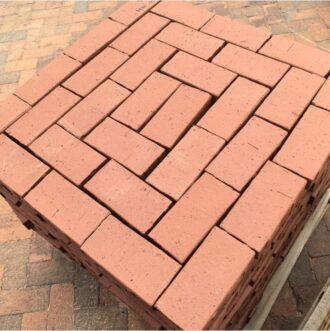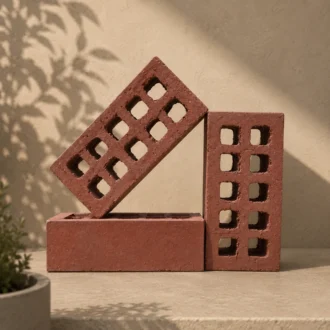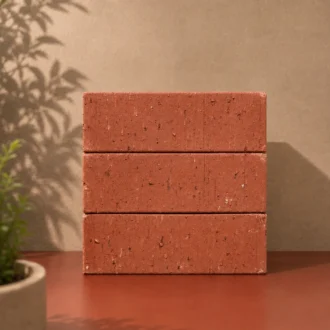
Terracotta clay bricks display the familiar earthy red-orange colour associated with fired clay. The tag may include clean face bricks, rustic walling products and purpose-made clay pavers. It is intended for buyers seeking authentic warmth rather than the brighter character of orange or the darker blend of rust.
Terracotta can range from soft burnt orange to warm red-orange and earthen brown. Texture, firing variation and sunlight create much of its appeal. A lightly irregular product feels handcrafted, while a smooth terracotta brick can sit comfortably within precise modern architecture.
Compare the product against both red and orange references to confirm its earthen balance. Cream mortar creates a sunny traditional character; grey mortar gives the brick a more architectural edge. Check the actual paver or face-brick classification, since similar terracotta colours occur in products intended for different uses.
Terracotta is strongly associated with courtyards, Mediterranean influences and relaxed outdoor living, but it also works in modern South African homes. Pairing it with clean charcoal elements prevents the palette from becoming overly traditional. Repeating the material in selected paving or planters can connect house and landscape.
Useful material and colour pairings include:
Suitability depends on the classification of the individual product. Options listed under this colour tag may include:
A face brick is a walling product and should not automatically be used for paving. For patios, paths and driveways, select a purpose-manufactured clay paver suitable for the expected pedestrian or vehicle traffic.
Measure the net area in square metres. For walls, multiply total wall length by height and subtract doors, windows and other openings. For paving, multiply the length by the width of each section and add the sections together.
| Application | Estimating rate | Formula |
| Single-skin face-brick wall | 55 bricks per m² | Net wall area x 55 |
| Double-skin face-brick wall | 110 bricks per m² | Net wall area x 110 |
| Clay paving | 50 pavers per m² | Paving area x 50 |
Worked example for 30 m²: allow 1,650 face bricks for a single-skin wall, 3,300 face bricks for a double-skin wall, or 1,500 clay pavers for a paved area of the same size. Round quantities up and ask the supplier or builder what additional allowance is appropriate for cuts, breakages, bond pattern and site conditions. Use the full Brick Tile Shop brick calculator for a project estimate.
Brick Tile Shop supplies terracotta clay products to homes and developments across Pretoria, Johannesburg, Centurion, Midrand and greater Gauteng. Other South African delivery locations can be quoted according to the selected range, quantity and transport requirements.
Terracotta is an earthy fired-clay colour between burnt orange and warm red, sometimes with brown variation.
Yes. Use clean forms, neutral mortar and dark contemporary frames to modernise the natural colour.
No. The colour family may be similar, but bricks, brick tiles and floor tiles have different formats and applications.
Visible walling may be suitable when correctly specified, but heat-exposed construction needs appropriate materials and detailing.
No. Check whether the individual product is a face brick, brick tile or purpose-manufactured clay paver.
Browse the terracotta products shown in this archive and open the individual listings to compare size, classification, texture, price and stock status. For an accurate quotation, send Brick Tile Shop the product name, required quantity and delivery address. Request samples where colour matching is important.