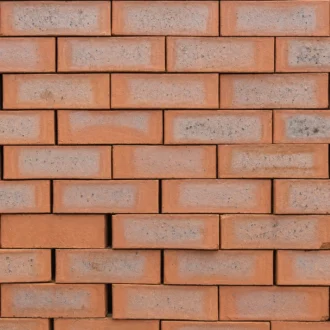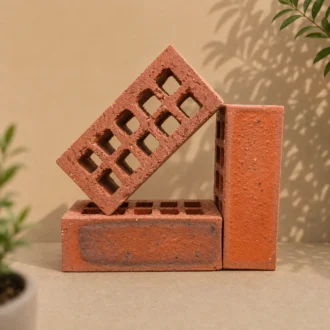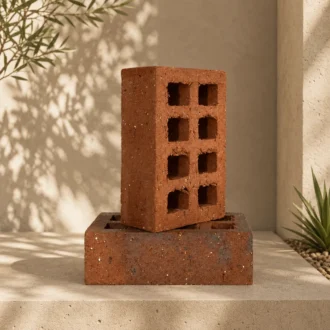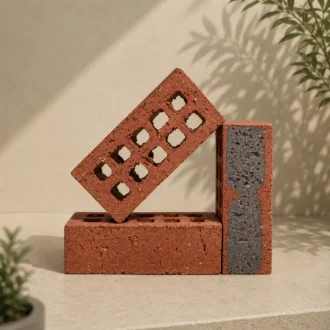
Showing all 4 results
Red blue clay bricks usually combine a red or burgundy base with blue-black, charcoal or violet firing marks. The word blue generally describes dark fired flashing rather than a bright painted-blue brick. This tag is for distinctive blended products whose red-and-dark contrast is clearly visible across the finished masonry.
Red blue blends are intentionally variable. One unit may be mainly red, another may carry a dark blue-black face, and others may bridge the two. The wall gains its identity from the distribution of these colours, so product photographs should show a representative panel rather than only selected individual bricks.
Ask to see the expected proportion of red and blue-black units in the range. Approve a sufficiently large panel and give the bricklayer clear blending instructions. Do not reject normal intentional flashing as a defect, but compare delivered packs with the approved reference before extensive work proceeds.
The blend suits industrial, heritage and bold contemporary work. It can add age and visual complexity to a simple building form without needing additional cladding. Light mortar makes the colour changes highly visible; dark joints create a moodier surface in which the flashing becomes the main detail.
Useful material and colour pairings include:
Suitability depends on the classification of the individual product. Options listed under this colour tag may include:
A face brick is a walling product and should not automatically be used for paving. For patios, paths and driveways, select a purpose-manufactured clay paver suitable for the expected pedestrian or vehicle traffic.
Measure the net area in square metres. For walls, multiply total wall length by height and subtract doors, windows and other openings. For paving, multiply the length by the width of each section and add the sections together.
| Application | Estimating rate | Formula |
| Single-skin face-brick wall | 55 bricks per m² | Net wall area x 55 |
| Double-skin face-brick wall | 110 bricks per m² | Net wall area x 110 |
| Clay paving | 50 pavers per m² | Paving area x 50 |
Worked example for 21 m²: allow 1,155 face bricks for a single-skin wall, 2,310 face bricks for a double-skin wall, or 1,050 clay pavers for a paved area of the same size. Round quantities up and ask the supplier or builder what additional allowance is appropriate for cuts, breakages, bond pattern and site conditions. Use the full Brick Tile Shop brick calculator for a project estimate.
Brick Tile Shop can investigate red blue clay brick availability for Gauteng projects in Johannesburg, Pretoria, Centurion, Midrand and surrounding areas. These specialised blends may have batch or minimum-order constraints, so confirm stock before programming construction or nationwide transport.
Usually not. Blue refers to dark blue-black or violet firing marks within a red clay blend.
The variation is part of the blend. The intended appearance emerges when many units are mixed across a wall.
Light grey or cream increases contrast. Dark grey subdues the joints and emphasises the fired flashing.
A manufactured blend is generally supplied as a balanced range. Discuss sorting expectations with the supplier before ordering.
Only use a red blue product as paving when it is specifically manufactured and classified as a clay paver.
Browse the red blue products shown in this archive and open the individual listings to compare size, classification, texture, price and stock status. For an accurate quotation, send Brick Tile Shop the product name, required quantity and delivery address. Request samples where colour matching is important.