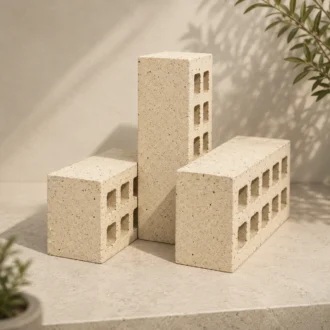
Cream clay bricks create light, warm masonry without the starkness of painted white walls. Products under this tag may range from pale biscuit and soft cream to lightly mottled beige. Use the archive to compare genuine cream-coloured face bricks or clay pavers, then confirm the product type and technical details on its individual page.
Cream is usually softer and less golden than yellow brick, and often lighter than buff. The colour can shift noticeably between sun and shade: direct light may emphasise warm undertones, while shaded walls can appear beige or pale grey. Physical samples are important when matching estate palettes or an existing building.
Light brickwork reveals mortar colour and workmanship clearly. Cream mortar produces a gentle tonal finish, while grey mortar creates a stronger grid. Examine the surface for speckling, flashes and texture, and approve a full sample panel rather than a single brick. Protect pale bricks from mud and mortar smears during construction.
Cream brickwork suits contemporary homes, relaxed country architecture and developments that need a bright neutral envelope. It pairs especially well with dark window frames because the contrast gives the facade definition. On smaller elevations, the light tone can reduce visual heaviness while the clay texture keeps the wall interesting.
Useful material and colour pairings include:
Suitability depends on the classification of the individual product. Options listed under this colour tag may include:
A face brick is a walling product and should not automatically be used for paving. For patios, paths and driveways, select a purpose-manufactured clay paver suitable for the expected pedestrian or vehicle traffic.
Measure the net area in square metres. For walls, multiply total wall length by height and subtract doors, windows and other openings. For paving, multiply the length by the width of each section and add the sections together.
| Application | Estimating rate | Formula |
| Single-skin face-brick wall | 55 bricks per m² | Net wall area x 55 |
| Double-skin face-brick wall | 110 bricks per m² | Net wall area x 110 |
| Clay paving | 50 pavers per m² | Paving area x 50 |
Worked example for 14 m²: allow 770 face bricks for a single-skin wall, 1,540 face bricks for a double-skin wall, or 700 clay pavers for a paved area of the same size. Round quantities up and ask the supplier or builder what additional allowance is appropriate for cuts, breakages, bond pattern and site conditions. Use the full Brick Tile Shop brick calculator for a project estimate.
Customers in Pretoria East, Centurion, Midrand, Sandton and surrounding Gauteng areas can request current cream-brick options and a delivered quotation. Brick Tile Shop can also quote for other South African destinations, subject to stock, transport requirements and safe vehicle access.
No. Cream often appears slightly richer or more biscuit-toned, while ivory is normally paler and more restrained. Manufacturer colour names also differ.
Some ranges reveal a warm yellow undertone in direct sun. View samples at the actual site before confirming the colour.
Cream mortar gives a blended finish; light grey adds definition; dark grey creates a bold contrast.
Site dirt and mortar residue can be more visible on pale products. Careful handling and manufacturer-approved cleaning are important.
No. Choose a purpose-manufactured clay paver for patios, paths or driveways and verify its traffic classification.
Browse the cream products shown in this archive and open the individual listings to compare size, classification, texture, price and stock status. For an accurate quotation, send Brick Tile Shop the product name, required quantity and delivery address. Request samples where colour matching is important.